MICHELIN Guide Recognition of Local Restaurants Positions Jalisco on the World Gastronomic Stage
 Editor
The state's inclusion in the Guide positions gastronomy as a strategic pillar of destination branding, economic development, and global projection toward 2027
With the goal of consolidating Jalisco as one of the most dynamic gastronomic destinations in the country and strengthening its international profile leading up to 2027, declared the Year of Gastronomy, the State Government, through the Ministry of Tourism, promoted the state's inclusion in the expansion of the MICHELIN Guide in Mexico.
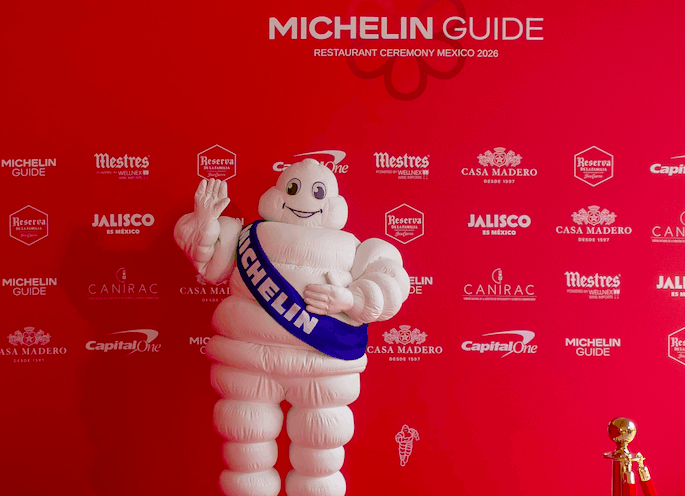
In this context, Guadalajara hosted the MICHELIN Star Awards ceremony for the first time, one of the most important events in the international gastronomic industry, which positions Jalisco at the center of the global culinary conversation.
One of the most anticipated moments of the event was the announcement of the restaurants that received a Michelin Star, among which Xokol and Alcalde, both from Jalisco, stand out. Xokol was also awarded the Green Star for its environmentally sustainable practices.
Francisco Ruano, chef at Alcalde, noted that it is very symbolic to have the greatness of Jalisco's cuisine and the flavors of his homeland recognized. The Bib Gourmand recommendation went to Palreal and Tacos y Gorditas Elvira.
During the event, the list of Guadalajara restaurants recommended by the MICHELIN Guide was also announced: Allium, Birriería David, Birriería Las Nueve Esquinas, La Docena, and Teté Cocina de Barrio.
In the interior of the state, in the municipality of La Huerta, the recommendation went to Coyul restaurant, and Pancho’s Tacos in Puerto Vallarta.
Gwendal Poullennec, International Director of the MICHELIN Guide, acknowledged the gastronomic greatness of Jalisco and Mexico, where its cuisine holds memory, identity, and emotion passed down from generation to generation.
“What makes Mexico so special is precisely that mix. Deep-rooted, strong traditions and, at the same time, incredible creative energy everywhere you look. From vibrant markets to restaurants that break barriers, the food here truly lives and breathes culture,” he noted.
Poullennec added that the MICHELIN Guide, created more than 125 years ago, has always had a simple objective: to help travelers discover extraordinary places and memorable experiences.
“As the guide grows in the country, it naturally reflects that diversity. And it is a true pleasure to see Jalisco, Puebla, and Yucatán now joining the selection of the Michelin Guide Mexico,” Poullennec commented.
With the arrival of Michelin, the state's profile is boosted among high-value travelers, specialized media, and tourism industry leaders, while gastronomy is consolidated as a strategic pillar of economic development and tourism promotion.
Thus, Jalisco strengthens its gastronomic value chain, from producers and farmers to restaurants and hotels. The Michelin Guide recognizes the quality and origin of ingredients, while the so-called "Michelin Bump" generates greater visibility and economic benefits for sectors linked to tourism and gastronomy.
According to MICHELIN data, obtaining a star can increase a restaurant's revenue by up to 20 percent. The impact benefits the entire value chain, including producers, transporters, hotels, artisans, and communities connected to the gastronomic sector.
This process is supported by a robust gastronomic ecosystem. In Jalisco, more than 46,000 food and beverage establishments operate, many of them in key tourist destinations.
The state's culinary diversity encompasses everything from traditional cuisines to contemporary signature dishes, broadening its appeal to different types of travelers.
Gastronomic positioning also extends to products with Denomination of Origin, such as tequila, raicilla, and Yahualica chili peppers, as well as routes and experiences that connect production, culture, heritage, and hospitality in destinations like Guadalajara, Puerto Vallarta, and Zapopan.
The impact of this visibility is reflected in a restaurant industry that has become a driving force in the state's economy: restaurants, bars, and nightclubs generate more than 20 billion pesos annually, equivalent to 15 percent of Jalisco's tourism GDP, and support approximately 300,000 direct jobs.
The arrival of MICHELIN highlights the state's culinary talent and the work of the entire value chain involved in the gastronomic experience.
This international boost aligns with Jalisco's global projection strategy in anticipation of events such as the 2026 FIFA World Cup and the arrival of ITB Americas.